Ready to Start Growing Food in Any Small Space?
Explore this complete 4 Foot Farm Review and discover how to build your own high-yield vertical garden today.
Visit the 4 Foot Farm Blueprint Product Page 🔒 Step-by-Step Digital Guide • Instant Access • Beginner FriendlyGrowing fresh food at home sounds appealing, especially when grocery prices feel unpredictable. But for apartment residents, renters, and homeowners with tiny yards, traditional gardening advice often creates a new problem: it assumes you have land, raised beds, tools, and plenty of direct sunlight.
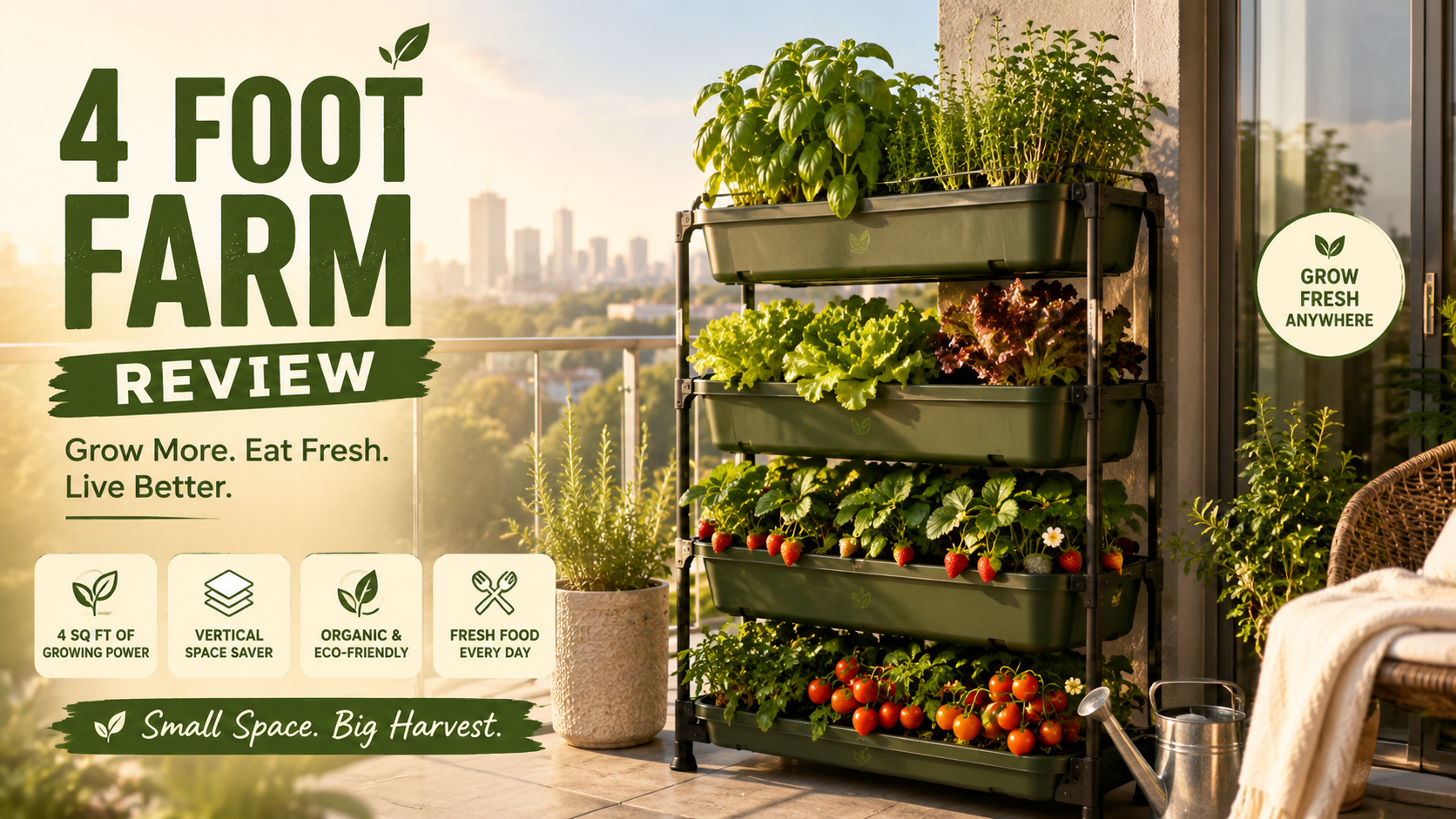
The 4 Foot Farm Blueprint takes a different approach. Instead of spreading plants across a large horizontal plot, it teaches a compact vertical-growing method designed for an area as small as four square feet.
But can a small setup genuinely produce useful food? Is the program practical for complete beginners? And are its savings and food-security claims realistic? This in-depth 4 Foot Farm Review provides an objective breakdown.
This 4 Foot Farm Review examines what the digital guide reportedly includes, how its approach works, its potential benefits and limitations, who it may suit, and what to check before buying.
Quick Verdict from Our 4 Foot Farm Review: The 4 Foot Farm Blueprint appears best suited to beginners who want an organized introduction to vertical food gardening in a balcony, patio, indoor growing area, or small backyard. Its compact approach can help people grow herbs and selected vegetables in limited space, but results will depend heavily on light, climate, crop choice, setup quality, pest control, and ongoing care. It should be viewed as a practical starting guide—not a guarantee that four square feet will feed an entire family or generate meaningful income.
4 Foot Farm Review: System at a Glance
In this part of our 4 Foot Farm Review, we summarize the basic program specifications and key parameters:
| Product Detail | What the Supplied Information Says |
|---|---|
| Product Name | The 4 Foot Farm Blueprint |
| Creator | Attributed to Sam McCoy |
| Product Format | Digital gardening guide or blueprint |
| Main Method | Compact vertical gardening |
| Suggested Minimum Footprint | Approximately four square feet |
| Experience Level | Designed primarily for beginners |
| Growing Locations | Indoor and outdoor setups are discussed |
| Core Audience | Renters, apartment residents, urban gardeners, preppers, and small-space homeowners |
| Additional Topic | Selling or bartering surplus produce |
| Main Limitation | Actual yield depends on growing conditions and user effort |
What Is the 4 Foot Farm Blueprint?
To provide a thorough 4 Foot Farm Review, we must first look at what the product actually delivers. The 4 Foot Farm Blueprint is a downloadable guide that explains how to build and manage a vertical garden in a compact area. The source material identifies self-reliance advocate Sam McCoy as its creator and says the method developed from experimentation with small growing setups.
The central idea explored in this 4 Foot Farm Review is straightforward: when ground space is limited, use height. Containers, shelves, supports, trellises, or other vertical structures can place multiple plants within a smaller footprint than a conventional garden bed.
The guide reportedly covers the process from planning and setup through planting and harvesting. It also provides indoor and outdoor options, crop-selection guidance, yield-maximization ideas, and a section about selling or bartering surplus produce.
This is not the same as receiving a ready-made garden. As we emphasize in this 4 Foot Farm Review, buyers should expect information and instructions, not land, plants, soil, containers, lights, tools, or an installed growing system. The value therefore depends on whether the guide saves enough research time and helps the user avoid common setup mistakes.
How Does the 4 Foot Farm Blueprint Work?
Traditional gardens spread crops across the soil horizontally. A core highlight of this 4 Foot Farm Review is that vertical gardening uses upward space so that more planting positions can fit within a limited floor area.
Depending on the crop and location, a small vertical system might involve:
- Stacked or tiered containers.
- Shelving positioned for adequate light.
- Trellises for climbing plants.
- Hanging planters for herbs or trailing crops.
- Compact pots arranged around a vertical support.
- An indoor setup supplemented with appropriate grow lights.
The blueprint reportedly organizes these concepts into a sequential plan for newcomers. Rather than collecting disconnected advice from blogs and videos, readers of this 4 Foot Farm Review will find that users follow one framework covering the initial layout, indoor or outdoor positioning, crop choices, maintenance, and harvesting.
The four-square-foot figure refers to the system’s footprint, not unlimited growing capacity. Vertical space can increase planting density, but every plant still needs suitable root volume, light, airflow, water, nutrients, temperature, and room to mature.
What Is Included in the Blueprint?
The exact contents should always be confirmed on the current product page, but our 4 Foot Farm Review outlines the core components described in the source:
1. Vertical Garden Setup Guidance
The main training explains how to grow upward rather than allowing every crop to spread across ground level. This may be particularly helpful for balconies, patios, small courtyards, and narrow backyard corners. As evaluated in this 4 Foot Farm Review, vertical growing is not suitable for every crop in the same way. Compact herbs, leafy greens, strawberries, and some climbing or dwarf varieties are generally easier to integrate than large, heavy, or deep-rooted plants. A useful blueprint helps users match crops properly.
2. Indoor and Outdoor Growing Options
The program reportedly discusses both indoor and outdoor configurations. This expands its potential audience, but “indoors” does not automatically mean that any room will work. Indoor food gardening may require adequate window exposure or grow lights, water-safe surfaces, drainage management, airflow, and temperature control. Outdoor users must consider wind, seasonal heat, heavy rain, pests, and sunlight.
3. Beginner-Friendly Steps
The guide is positioned for people with little or no gardening experience. A structured sequence can reduce the confusion beginners face when choosing containers, deciding what to plant, and understanding basic maintenance. As noted in this 4 Foot Farm Review, free information is widely available, but beginners often struggle to determine which advice applies to their climate, space, and crop.
4. Crop-Selection Information
The supplied material says the blueprint focuses on non-GMO fruits and vegetables suited to compact growing. However, this 4 Foot Farm Review clarifies that “non-GMO” should not be confused with organic or chemical-free. GMO status concerns seed breeding, not whether synthetic fertilizers or pesticides are used.
5. Yield-Maximization Strategies
Vertical stacking and denser planting can make better use of limited space. Good planning may allow a small garden to produce a helpful amount of herbs, salad greens, or seasonal vegetables. However, overcrowding can reduce airflow, shade lower plants, increase disease pressure, and create nutrient competition.
6. Surplus Produce and Bartering Module
The guide reportedly includes a chapter on selling or bartering extra produce. That is an unusual addition for an introductory small-space gardening product. As examined in this 4 Foot Farm Review, income should be treated as a possibility rather than an expected result, as local rules can affect produce sales.
Check Current Inclusions: See what is featured in the official guide layout by reviewing the primary source materials.
Can You Really Grow Food in Four Square Feet?
Yes, it is possible to grow food within a four-square-foot footprint, particularly when vertical space is used intelligently. The more important question in this 4 Foot Farm Review is how much and what type of food the setup can produce.
A compact garden may be well suited to:
- Basil, parsley, mint, chives, and other herbs.
- Lettuce, spinach, and selected leafy greens.
- Radishes and other small, fast-growing crops.
- Strawberries in suitable containers.
- Cherry tomatoes with adequate support and sunlight.
- Dwarf peppers or compact varieties.
- Climbing beans, peas, or cucumbers where conditions allow.
Actual performance varies. A sunny outdoor balcony in a suitable season may support crops that struggle in a dim room. Large fruiting plants normally require more light, nutrients, and root space than herbs or leafy greens.
A four-square-foot system can supplement grocery purchases and improve access to freshly harvested food. Claiming that it will reliably feed an entire family would require much stronger evidence. Our 4 Foot Farm Review concludes that it is more realistic to expect a contribution to household produce—not complete food independence.
Could It Reduce Your Grocery Bill?
Home gardening can reduce spending on certain produce, but savings are not automatic. This 4 Foot Farm Review notes that the source material mentions ongoing expenses of roughly $10 per month, which should be viewed as an estimate rather than a universal cost. Expenses include containers, growing medium, seeds, fertilizer, replacement parts, water, pest control, and electricity for indoor lights.
The best financial value often comes from crops that are:
- Relatively expensive to buy fresh.
- Used regularly in small quantities.
- Quick to harvest or capable of repeated harvests.
- Well suited to the available light and climate.
Fresh herbs and cut-and-come-again greens may offer more practical savings in a tiny area than crops that need months of care for one harvest. Before expecting a specific monthly reduction, track startup costs and compare your yields.
Can It Improve Household Food Security?
A small garden can improve resilience by supplying some fresh produce and helping users develop food-growing skills. It can also reduce dependence on the store for selected herbs and vegetables during productive periods.
However, as we point out in this 4 Foot Farm Review, a four-square-foot garden is not a complete food-security plan. It is unlikely to provide all the calories, protein, fats, and crop diversity a household needs. Indoor year-round growing may also depend on artificial light and controlled conditions. The realistic benefit is supplemental self-reliance.
Can You Make Money with a Tiny Vertical Garden?
Potentially, but expectations should remain modest. A productive setup might create extra herbs, seedlings, or specialty produce that can be bartered or sold. Whether that is practical depends on yield, local demand, pricing, packaging, transport, and applicable regulations.
For most beginners reading this 4 Foot Farm Review, the better first objective is to grow consistently for personal use. Treat any income as a possible secondary benefit rather than the primary reason to buy the guide.
Realistic Use Cases for the Blueprint
Our 4 Foot Farm Review identifies several practical applications where this system excels:
- Apartment Balcony Gardener: A renter with sufficient sunlight could use narrow vertical shelves for herbs, greens, or compact tomatoes while complying with building rules.
- Indoor Herb and Greens Station: Dedicating an indoor space with grow lights and drainage trays to harvest culinary crops year-round.
- Small Backyard Supplement: Homeowners can install vertical structures along fences or patios without sacrificing yard space.
- First Step Toward Self-Reliance: Beginners can master watering, soil care, and pest management on a small scale before expanding.
- Educational Family Project: A manageable project to teach children where food comes from and how daily care yields results.
4 Foot Farm Review: Pros and Cons
Here is an honest summary of the key advantages and drawbacks observed in our 4 Foot Farm Review:
Pros
- Designed around genuine space limitations.
- Uses vertical space more efficiently than flat layouts.
- Includes both indoor and outdoor growing options.
- Structured clearly for beginners needing guidance.
- Instant digital delivery allows immediate access.
- Covers crop selection, setup, and harvesting in one guide.
- Includes an unusual surplus-produce and bartering module.
- Supports fresh food access and practical self-reliance.
Cons
- It is an informational digital guide, not a physical kit.
- Containers, soil, seeds, and grow lights cost extra.
- Yields depend heavily on light, climate, and daily care.
- Four square feet cannot replace all household groceries.
- Indoor setups may require electricity and extra gear.
- Savings and produce-selling income are not guaranteed.
- Pest control and soil management may need extra research.
- Non-GMO does not automatically equal organic methods.
4 Foot Farm Blueprint vs. Other Small-Space Methods
This comparison table in our 4 Foot Farm Review illustrates how the guide contrasts with alternative gardening systems:
| Feature | 4 Foot Farm Blueprint | Square-Foot Gardening | General Container Gardening |
|---|---|---|---|
| Primary Layout | Vertical, compact footprint | Horizontal grid in raised beds | Individual pots or containers |
| Space Requirement | Marketed for ~4 square feet | Requires an outdoor bed | Flexible based on pot count |
| Indoor Suitability | Reportedly covered | Generally limited | Possible with suitable light |
| Beginner Structure | One organized digital system | Well-established method | Scattered across free resources |
| Vertical Emphasis | Central to the method | Optional for climbing crops | Optional |
| Surplus Income Topic | Reportedly included | Not usually central | Not usually central |
| Materials Included | Instructions only | Instructions only | Instructions only |
| Best Advantage | Consolidated small-space plan | Proven bed-layout concept | Maximum flexibility |
Who Is the 4 Foot Farm Blueprint Best For?
Based on our 4 Foot Farm Review, this guide is an ideal match for:
- Apartment residents with a balcony or indoor growing space.
- Renters who cannot dig permanent garden beds in their yard.
- Urban households with small patios, porches, or courtyards.
- Homeowners wanting to utilize narrow, unused corners efficiently.
- Beginners who feel overwhelmed by scattered online gardening tips.
- Preppers and self-reliance seekers starting on a small scale.
- Families seeking an engaging, educational home project.
- Gardeners targeting high-value culinary herbs and leafy greens.
Who Should Skip It?
You may want to look elsewhere if you:
- Expect a physical kit containing soil, seeds, and hardware.
- Already have extensive experience with vertical gardening.
- Expect a four-square-foot garden to replace all grocery purchases.
- Lack access to adequate natural sunlight or artificial grow lights.
- Are unwilling to perform regular watering, feeding, and pest checks.
- Want guaranteed financial savings or commercial produce revenue.
- Prefer a physical printed manual over a digital download.
What to Check Before Buying
Before completing your purchase, this 4 Foot Farm Review recommends confirming the following details on the official checkout page:
- The current price and any optional add-ons or upgrades.
- The file format and compatibility with your reading devices.
- The exact modules, bonuses, and crop lists provided.
- Whether the instructions align with your indoor or outdoor space.
- The refund policy and guarantee conditions.
- The level of customer support available from the seller.
- Estimated costs for additional supplies like pots, soil, and seeds.
4 Foot Farm Review: Frequently Asked Questions
As covered in this 4 Foot Farm Review, it is an established digital gardening guide that delivers instant access upon purchase. Always review current terms and seller details on the official page.
Yes, the blueprint is structured specifically for people without prior gardening experience, though basic care and watering must still be learned.
Yes, balconies, patios, and indoor areas with appropriate light and drainage can support these vertical setups.
Herbs, leafy greens, radishes, strawberries, cherry tomatoes, and compact climbing crops are common choices.
Indoor setups can produce food during winter if supported with suitable temperatures and artificial grow lights.
No, the product is sold as a digital download. Users can print the material themselves if they prefer a hard copy.
No physical materials are included. Containers, soil, seeds, fertilizer, and lights must be bought separately.
It can reduce spending on fresh herbs and specialty salad greens, but overall savings depend on your startup expenses and yields.
The guide includes a surplus module, but any income depends on your extra yield, local regulations, and finding buyers.
No, non-GMO refers to seed breeding, while organic status depends on how the plant is grown and fertilized.
Final Verdict: Is the 4 Foot Farm Blueprint Worth It?
To conclude this 4 Foot Farm Review, the 4 Foot Farm Blueprint addresses a widespread challenge by helping people without yard space grow fresh produce. Its vertical growing techniques, compact footprint, and structured beginner lessons make small-space gardening accessible.
The main value of the guide lies in its consolidated convenience. Rather than sifting through endless conflicting blog posts, beginners get an actionable roadmap tailored for micro-gardening.
However, realistic expectations remain essential. A four-square-foot plot will not feed an entire household or replace your grocery store, and ongoing maintenance is necessary. When treated as a structured blueprint to supplement fresh herbs and vegetables, it provides a solid foundation.
Start Your Small-Space Food Garden Today
Learn how to grow fresh food in just four square feet with step-by-step guidance.
Explore the 4 Foot Farm Blueprint Backed by Digital Download Access • Start Growing TodayAffiliate Disclosure & Disclaimer: This 4 Foot Farm Review article may contain affiliate links. If you purchase through a link, the publisher may receive a commission at no additional cost to you. This review is informational and does not guarantee gardening, financial, health, or income results. Product contents, price, bonuses, and terms may change; verify current details on the product page.